
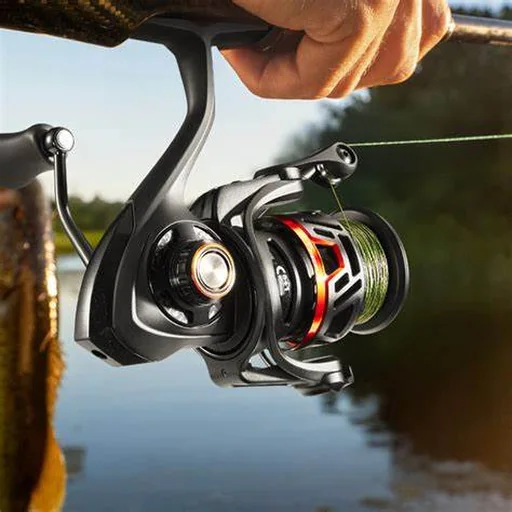
Learn how drag works, how to set a sensible starting drag, and why line strength, knots, rod action and cover change the right setting.
Drag lets a fish pull line before pressure exceeds the safe limit of the line, knot, rod or hook. The goal is controlled pressure, not simply the highest drag number your reel can produce.
Use a scale for repeatability
Pull line from the rod tip at a realistic angle and measure the force with a handheld scale. This is more accurate than judging drag only by feel.
Start conservatively
Many anglers begin with drag set to a fraction of line strength, then adjust for technique and conditions. Knot strength and abrasion can lower the real breaking point.
Consider the hook
Fine-wire hooks can straighten under too much pressure, while heavy hooks used around cover may require a more assertive setup.
Rod action matters
A softer rod absorbs surges. A very fast, powerful rod transfers more load to the line and drag system.
Adjust during the fight
Small changes can be useful when a fish moves from cover to open water, but avoid large mid-fight adjustments unless necessary.
Smoothness and consistency matter more than a huge maximum drag specification.
Compare current Piscifun gear and deals
Retail pricing and availability change frequently, so use the official store page for current offers rather than relying on a static price here.
Check current Piscifun deals ↗
We publish practical fishing explainers and specification-based gear coverage. Our goal is to separate useful setup guidance from promotional claims.
Read our editorial policy →